
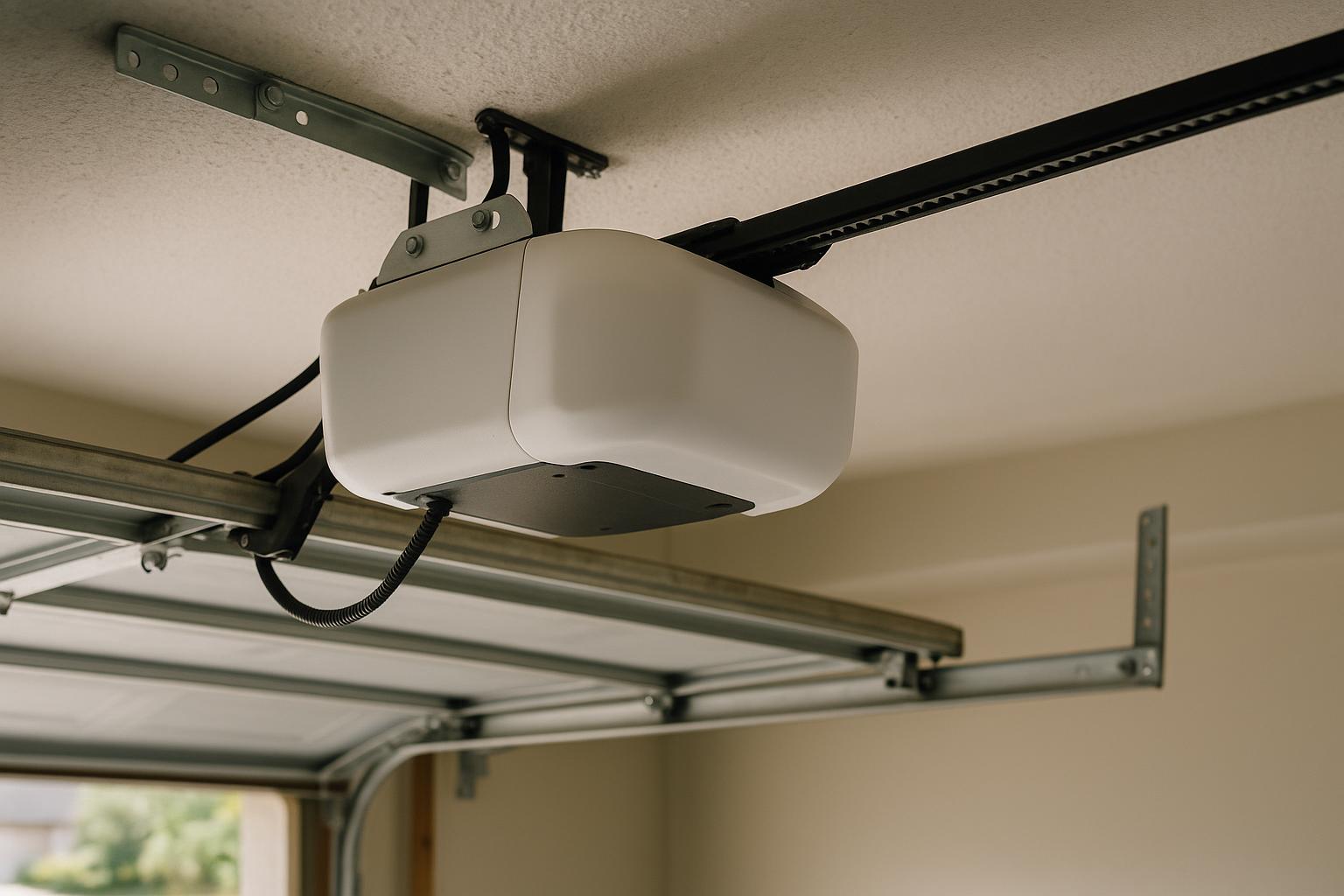
Your Garage Door Opener Won't Last Forever — Here's What to Expect
Your garage door opener is one of those things you don't think about until it stops working. You press the button, the door goes up, you drive out — day after day, year after year. But like any mechanical system, your opener has a lifespan, and knowing when it's nearing the end can save you from getting stranded in your driveway on a Monday morning.
For homeowners in Auburn, where we deal with hot, humid summers and the occasional cold snap, understanding how long your garage door opener should last — and what shortens or extends that life — can help you plan ahead and avoid unexpected breakdowns.
The Average Lifespan of a Garage Door Opener
Most garage door openers last between 10 and 15 years with regular use and basic maintenance. Some higher-end models with DC motors and belt-drive systems can push past 15 years, while older chain-drive units may start showing their age closer to the 10-year mark.
Several factors influence how long your opener will last:
- Frequency of use: A household that opens and closes the garage door six or more times a day will wear out an opener faster than one that uses it twice daily.
- Maintenance habits: Openers that are lubricated, inspected, and kept clean tend to outlast neglected ones.
- Climate and environment: Alabama's humidity can contribute to corrosion on internal components, especially in garages that aren't well-ventilated.
- Quality of installation: An opener that was properly installed and balanced from the start will perform better over time than one that was rushed or improperly set up.
- Door weight and balance: If your garage door is heavy or out of balance, the opener has to work harder every cycle, which accelerates wear.
Signs Your Garage Door Opener Is on Its Way Out
Your opener usually won't quit without warning. Here are the most common signs that it's reaching the end of its useful life:
1. It's Slower Than It Used to Be
If your garage door seems to crawl open or close noticeably slower than it did a few years ago, the motor may be losing power. A sluggish opener is often one of the first signs of internal wear.
2. It Operates Intermittently
Does your opener work fine one day and ignore your remote the next? Intermittent operation — where the door sometimes responds and sometimes doesn't — often points to a failing logic board or motor. If you've already replaced the remote batteries and checked the sensors, the opener itself may be the problem.
3. Excessive Vibration
All openers produce some vibration, but if yours has started shaking noticeably or causing the mounting bracket to loosen, the internal components are likely worn. This is especially common in older chain-drive models.
4. It Runs But the Door Doesn't Move
When you hear the motor engage but the door stays put, the gears inside the opener may be stripped. Gear replacement is possible on some models, but if the unit is already 12 or more years old, a full replacement is usually the smarter investment.
5. Lack of Safety Features
Garage door openers manufactured before 1993 may not have auto-reverse safety features, which became a federal requirement that year. If your opener is old enough to lack photoelectric sensors or auto-reverse functionality, replacing it isn't just a convenience upgrade — it's a safety issue, especially for families with children or pets.
Should You Repair or Replace?
Not every problem means you need a brand-new opener. Here's a general guide:
Consider repairing if:
- The opener is less than 8 years old
- The issue is isolated — a stripped gear, a faulty remote receiver, or a worn belt
- The motor still runs strong and the unit has modern safety features
Consider replacing if:
- The opener is 10 years old or older
- You're dealing with recurring issues
- The unit lacks safety sensors or auto-reverse
- You want quieter operation or smart home connectivity
- Repair costs approach 50% or more of a new unit's price
For many Auburn homeowners, upgrading to a newer opener also means gaining features like battery backup — which keeps your garage functional during power outages — Wi-Fi connectivity for smartphone control, and significantly quieter belt-drive operation.
What to Look for in a New Garage Door Opener
If you've decided it's time for a replacement, here are the key things to consider:
Drive Type
- Chain drive: Affordable and durable, but the loudest option. Best for detached garages where noise isn't a concern.
- Belt drive: Quieter and smoother. Ideal for attached garages, especially if bedrooms are above or adjacent to the garage.
- Screw drive: Low maintenance with fewer moving parts, but can struggle in extreme temperature swings.
- Wall-mount (jackshaft): Mounts on the wall beside the door instead of the ceiling, freeing up overhead space. A great option for garages with high or cathedral ceilings.
Motor Power
Most residential garage doors work well with a 1/2 HP motor. Heavier or oversized doors may require 3/4 HP or more. Getting the right motor size matters — an underpowered opener will burn out faster.
Smart Features
Modern openers from brands like LiftMaster and Chamberlain offer built-in Wi-Fi, allowing you to open, close, and monitor your garage door from your phone. Some even integrate with home security systems. If you've ever driven halfway to work wondering whether you closed the garage, this feature alone is worth the upgrade.
Why Professional Installation Matters
While some handy homeowners attempt DIY opener installation, there are good reasons to have it done professionally. A garage door opener needs to be properly mounted, wired, and calibrated to your specific door's weight and balance. Incorrect installation can lead to premature wear, safety hazards, and voided manufacturer warranties.
At Auburn Garage Door Repair, we handle opener installations across Auburn, Opelika, Smiths Station, and the surrounding areas. We'll help you choose the right unit for your door, install it correctly, and make sure everything is dialed in before we leave.
A Little Maintenance Goes a Long Way
Whether your opener is brand new or has a few years on it, basic maintenance can extend its life significantly:
- Lubricate the chain or screw drive annually with a garage door-specific lubricant
- Test the auto-reverse feature monthly by placing a board under the door
- Keep the sensors clean and aligned
- Tighten the mounting hardware once a year
- Have a professional inspect the full system — door, springs, cables, and opener — every year or two
These small steps can add years to your opener's life and help you catch problems before they leave you stuck.
Don't Wait for a Complete Failure
If your garage door opener is showing signs of age, the worst thing you can do is ignore it and hope for the best. A failing opener can leave you locked out of — or trapped inside — your garage at the worst possible time. If you're in Auburn or the surrounding communities and your opener isn't performing like it should, give us a call. We'll take a look, give you an honest assessment, and help you decide whether a repair or replacement makes the most sense for your situation.