
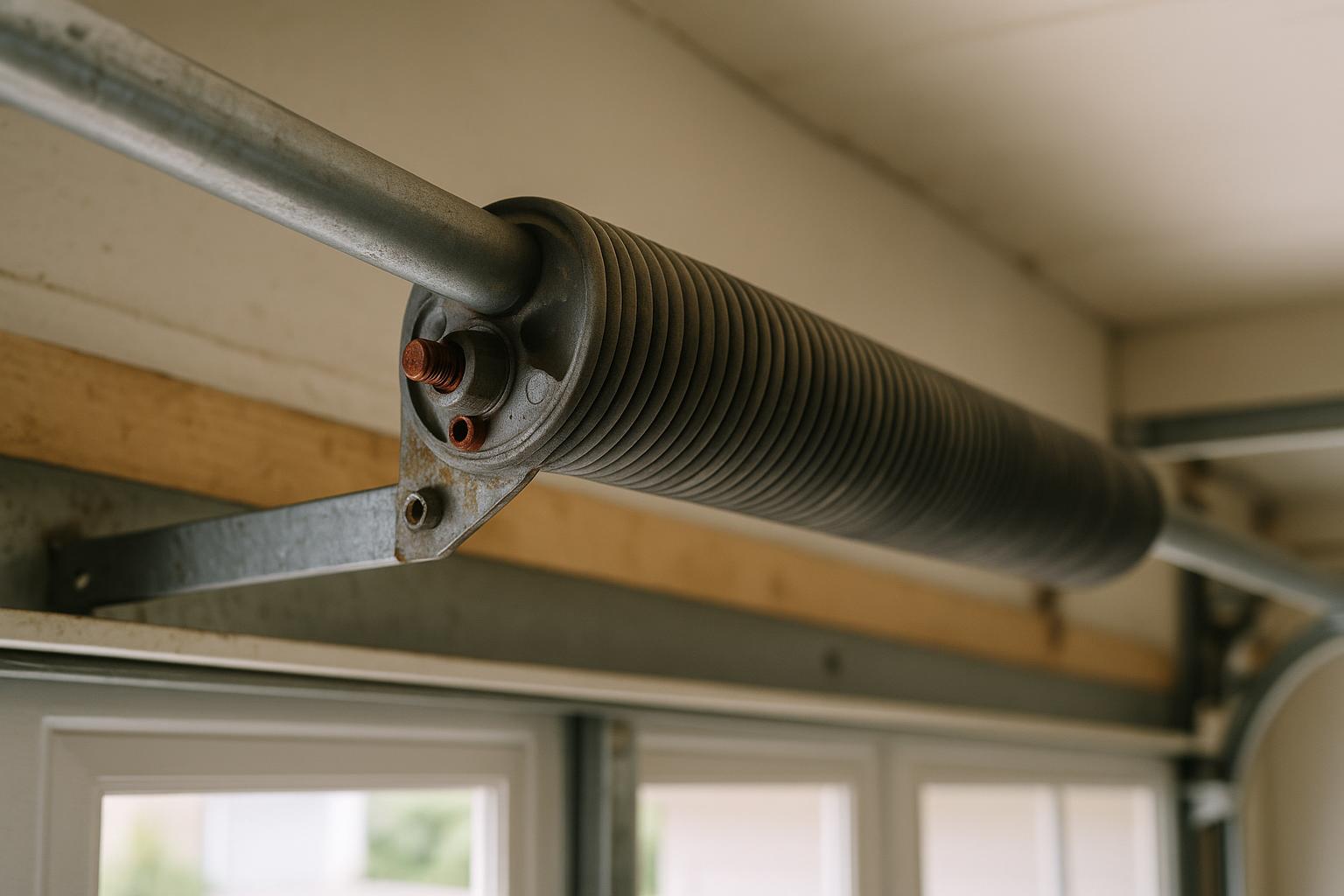
Your Garage Door Springs Are Working Harder Than You Think
Most homeowners in Auburn don't think about their garage door springs until something goes wrong. And when something does go wrong, it usually happens at the worst possible time — you're running late for work, it's pouring rain, or you've just pulled into the driveway after a long day at the office.
Garage door springs are the unsung heroes of your entire garage door system. They bear the full weight of the door — often 150 to 250 pounds or more — every single time it opens and closes. Over the years, that constant tension takes a toll. Eventually, every spring reaches the end of its lifespan, and knowing the warning signs can save you from an unexpected (and potentially dangerous) failure.
How Garage Door Springs Work
Before we get into the signs of trouble, it helps to understand what your springs actually do. There are two main types of garage door springs:
- Torsion springs — These are mounted on a metal shaft above the garage door opening. They use torque to lift the door and are the most common type found in residential homes across Auburn and Opelika.
- Extension springs — These run along the horizontal tracks on either side of the door. They stretch and contract to assist with lifting. They're more common on older doors and lighter single-car garage doors.
Both types are under extreme tension, which is why spring replacement is one of the most dangerous garage door repairs to attempt on your own. But recognizing when they need attention? That's something every homeowner should know.
7 Warning Signs Your Garage Door Springs Are Failing
1. Your Door Feels Heavier Than Usual
Try this simple test: disconnect your garage door opener by pulling the emergency release cord, then manually lift the door about halfway. A properly balanced door with healthy springs should stay in place on its own. If it feels extremely heavy or immediately slides back down, your springs are likely losing tension and may need replacement soon.
2. The Door Opens Unevenly or Crooked
If one side of your garage door rises faster than the other, it could mean one of your springs has weakened or broken while the other is still functional. This uneven movement puts extra strain on your opener, tracks, and cables, and it can lead to bigger problems if left unaddressed.
3. You Heard a Loud Bang From the Garage
A broken torsion spring releases its stored energy all at once, producing a loud bang that many Auburn homeowners describe as sounding like a gunshot or a car backfiring. If you heard a sudden loud noise from your garage and now your door won't open, a broken spring is almost certainly the cause.
4. There's a Visible Gap in the Spring
Take a look at the torsion spring above your garage door. An intact spring is a tightly wound coil with no gaps. A broken spring will have a visible separation — usually a gap of one to two inches somewhere along its length. This is the clearest visual confirmation that your spring has snapped.
5. Your Opener Struggles or Stops Mid-Cycle
When springs fail, your garage door opener has to work much harder to lift the door. You might notice the motor straining, the door moving more slowly than usual, or the opener stopping partway through the cycle. Running your opener without functional springs can burn out the motor, turning a spring replacement into a much more expensive repair.
6. The Door Slams Shut Quickly
Healthy springs control the speed at which your door closes. If your garage door drops faster than normal or slams shut when you release it manually, the springs are no longer providing adequate counterbalance. This is a safety hazard, especially in homes with children or pets.
7. Your Springs Are More Than 7-10 Years Old
Most standard garage door springs are rated for approximately 10,000 cycles — one cycle being a single open-and-close. For the average household that uses the garage door three to four times a day, that works out to roughly seven to ten years of use. If your springs are approaching or past that age, it's wise to have them inspected even if you haven't noticed any obvious problems yet.
Can You Replace Garage Door Springs Yourself?
We understand the DIY spirit — it's strong here in Auburn. But garage door spring replacement is one job we strongly recommend leaving to professionals. Here's why:
- Extreme tension: Torsion springs are wound under tremendous force. A spring that slips during installation can cause serious injury.
- Specialized tools required: Proper replacement requires winding bars, clamps, and other tools that most homeowners don't have.
- Precise calibration: Springs must be wound to the exact right tension for your specific door weight and size. Too much or too little tension creates safety issues and premature wear.
A trained technician can typically complete a spring replacement in under an hour, and the peace of mind is well worth it.
What to Expect During a Professional Spring Replacement
When you call a garage door professional in Auburn for spring replacement, here's what the process generally looks like:
- The technician inspects your entire door system — springs, cables, drums, tracks, and opener — to assess the full picture.
- Old springs are carefully unwound and removed.
- New springs matched to your door's weight and dimensions are installed and precisely calibrated.
- All hardware is tightened and lubricated.
- The door is tested through several cycles to ensure smooth, balanced operation.
At Auburn Garage Door Repair, we also check your cables and other components during every spring replacement because worn springs often cause accelerated wear on surrounding parts. Catching those issues early saves you money down the road.
How to Extend the Life of Your Garage Door Springs
While springs won't last forever, you can maximize their lifespan with a few simple maintenance habits:
- Lubricate your springs every six months with a silicone-based garage door lubricant. This reduces friction and prevents rust, which is especially important given the humidity we experience here in central Alabama.
- Schedule annual inspections so a professional can catch early signs of wear before a spring breaks unexpectedly.
- Upgrade to high-cycle springs if you use your garage door frequently. These are rated for 25,000 to 50,000 cycles and can last significantly longer than standard springs.
- Keep your door balanced by addressing any alignment or track issues promptly. A misaligned door puts uneven stress on your springs.
Don't Wait for a Broken Spring to Leave You Stranded
A broken garage door spring is more than an inconvenience — it can leave your car trapped in the garage, compromise your home's security, and even pose a safety risk to your family. If you've noticed any of the warning signs we've discussed, or if your springs are getting up there in age, now is the time to act.
Auburn Garage Door Repair provides fast, reliable spring replacement for homes and businesses throughout Auburn, Opelika, Smiths Station, and the surrounding communities. We show up on time, explain what needs to be done, and get your door working safely — the first time. Give us a call today to schedule an inspection or to get help with an emergency spring failure.