
Your Garage Door Shouldn't Sound Like That
You press the button, and instead of a smooth, quiet glide, your garage door groans, screeches, or rattles its way up the track. If you've been living with a noisy garage door in Auburn, you're not alone — and you're not imagining things. Those sounds are your door's way of telling you something needs attention.
A garage door is one of the largest moving parts in your home, and it operates under significant tension and mechanical stress every single day. When something starts to wear out, shift, or loosen, the first sign is almost always noise. The good news? If you catch it early, most noisy garage door problems are straightforward and affordable to fix.
Let's break down the most common garage door noises, what causes them, and what you should do about each one.
Grinding or Scraping Sounds
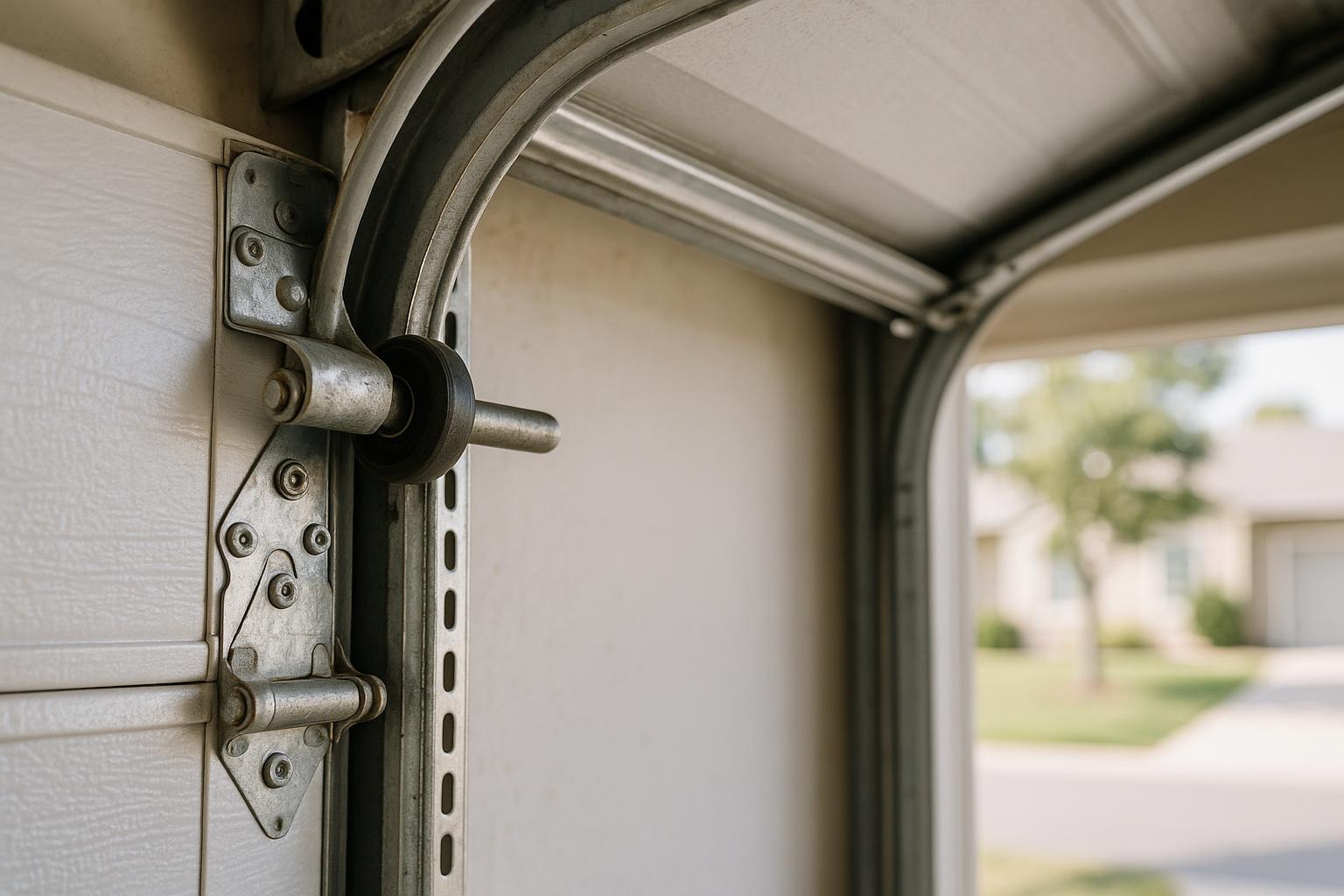
A grinding noise when your garage door moves is one of the more concerning sounds you might hear. This usually points to a problem with the tracks or the rollers.
- Worn rollers: Metal rollers wear down over time and can start grinding against the track. If your door uses steel rollers, they may need to be replaced with nylon rollers, which are quieter and require less maintenance.
- Misaligned tracks: If the vertical or horizontal tracks have shifted even slightly, the door can scrape against them as it moves. This creates friction that wears down components faster and can eventually cause the door to get stuck.
- Debris in the tracks: Dirt, leaves, and small stones can accumulate in the tracks, especially here in Auburn where red clay dust seems to get everywhere. A simple cleaning can sometimes solve the problem entirely.
If you hear grinding, take a look at the tracks and rollers. If you see visible wear, dents in the track, or the door seems to wobble as it moves, it's time to have a professional inspect the system before the damage gets worse.
Squealing or Squeaking Sounds
High-pitched squealing is usually a lubrication issue. Your garage door has multiple moving parts — hinges, rollers, springs, and bearings — that all need proper lubrication to function quietly.
- Dry hinges and rollers: Over time, the factory lubrication wears off. A garage door-specific silicone or lithium-based lubricant applied to the hinges, rollers, and springs can often eliminate squealing immediately.
- Torsion spring friction: The torsion springs above your door twist and unwind with every cycle. When they dry out, they can produce a loud squealing sound. Lubricating the coils can help, but if the springs are old, they may be nearing the end of their lifespan.
- Worn bearings: The bearings in the spring assembly and rollers can wear out and start producing a high-pitched whine. Bearing replacement is a relatively simple repair for a trained technician.
We recommend Auburn homeowners lubricate their garage door's moving parts at least twice a year — once in the spring and once in the fall. It takes about ten minutes and can prevent a lot of unnecessary wear.
Banging or Popping Sounds
Sudden banging or popping noises are harder to ignore, and for good reason. These sounds often indicate a more serious mechanical issue.
- Loose hardware: The nuts, bolts, and brackets on your garage door can loosen over time due to the constant vibration of daily use. A loose bracket or hinge can cause a loud banging sound each time the door passes that point on the track.
- Broken or slipping cables: If a cable has frayed or slipped off the drum, you may hear a popping or snapping sound. This is a safety concern and should be addressed immediately — garage door cables are under extreme tension.
- Panel or section issues: If a panel is cracked or warped, it may pop or bang as the door bends through the curved section of the track. This is especially common with older wooden garage doors that have been exposed to Alabama's humidity for years.
If you hear a sudden loud bang and your door stops working, do not attempt to operate it again until a technician has inspected it. Continuing to run a door with a broken cable or hardware failure can cause further damage or create a dangerous situation.
Rattling or Vibrating Sounds
A steady rattling sound usually means something is loose but not yet broken. This is often the easiest type of noise to fix.
- Loose chain or belt: If your garage door opener uses a chain drive, the chain can loosen over time and rattle against the rail. Adjusting the chain tension is a quick fix. Belt-drive openers are inherently quieter, and if rattling is a constant issue, upgrading to a belt-drive system might be worth considering.
- Vibrating opener: The opener unit itself can vibrate against the ceiling or its mounting bracket. Anti-vibration pads or tightening the mounting hardware can reduce this noise significantly.
- Loose door hardware: Go through and check every nut, bolt, and hinge on the door itself. Tightening them with a socket wrench can often eliminate rattling in minutes.
When Noise Means It's Time for an Upgrade
Sometimes a noisy garage door isn't just telling you it needs a repair — it's telling you it's reached the end of its useful life. If your garage door is more than 15 to 20 years old and you're dealing with multiple noise issues, frequent repairs, or visible wear across the entire system, a new garage door installation may actually be more cost-effective than continuing to patch things together.
Modern garage doors are engineered to run quieter, offer better insulation, and require less maintenance. For homeowners in Auburn and the surrounding areas like Opelika and Smiths Station, upgrading to a new insulated door can also help with energy efficiency — something that matters when summer temperatures climb into the nineties.
Don't Ignore the Warning Signs
It's easy to tune out a noisy garage door, especially when it still opens and closes. But every one of those sounds represents wear happening in real time. What starts as an annoying squeak can turn into a broken roller. A small rattle can become a snapped cable. Addressing noise early almost always saves you money and prevents the inconvenience of a door that fails when you need it most.
If your garage door has been making unusual sounds, Auburn Garage Door Repair can diagnose the problem and get things running quietly again. We serve homeowners and businesses throughout Auburn, Opelika, Loachapoka, Notasulga, Salem, and Smiths Station with honest, on-time service. Whether you need a quick tune-up or a full system replacement, we'll give you a straight answer and a fair price.
Give us a call or reach out online to schedule an inspection. Your garage door has been trying to tell you something — let's find out what it is.