
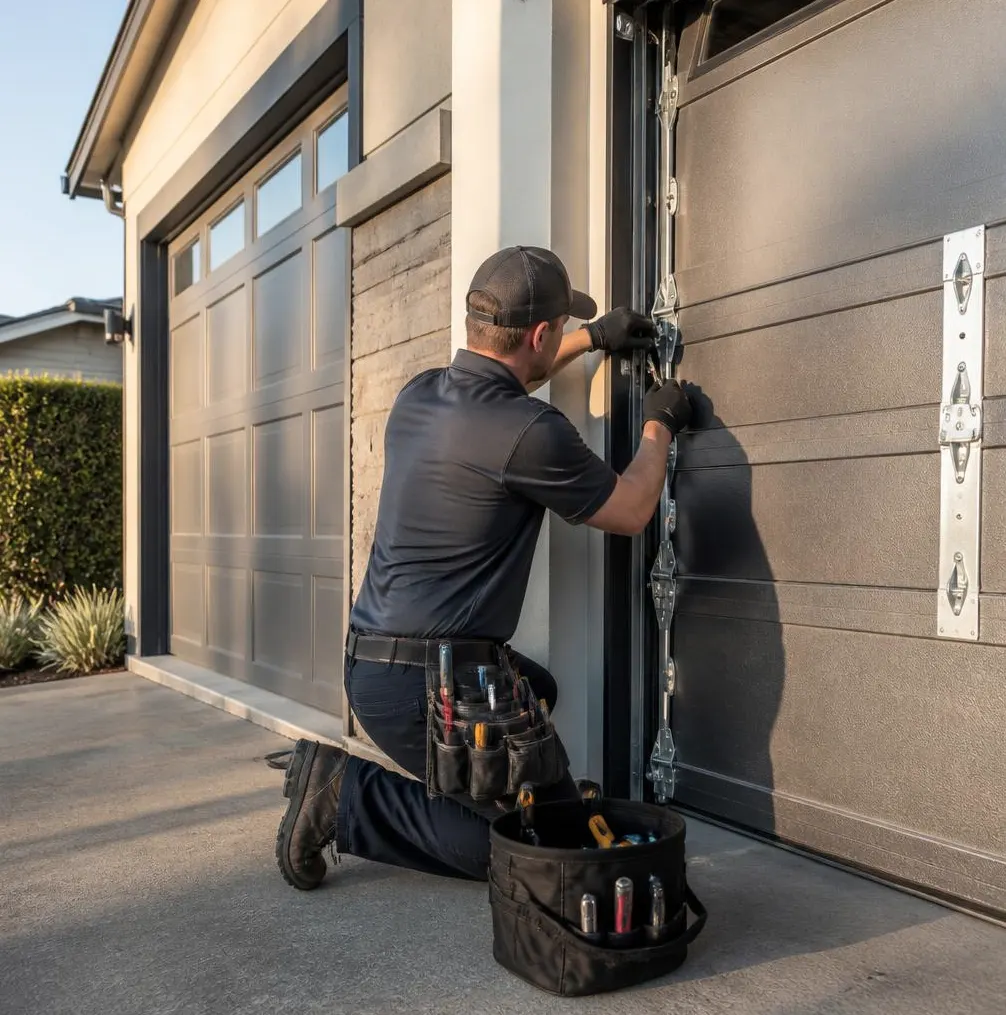
The Mistake Almost Everyone Makes First
Most homeowners start garage door maintenance by grabbing a can of WD-40 and spraying it on everything that moves — the springs, the hinges, the track. It feels productive. It's fast, it's cheap, and watching that oily sheen settle over the hardware gives the satisfying impression that you've just done something useful.
Here's the problem: WD-40 is a solvent, not a lubricant. On rollers and hinges it attracts dust and grit, which actually speeds up wear. On springs, it does nothing for the metal fatigue that causes them to snap, and reaching toward a spring under tension is one of the few things on this list you should never do yourself. The habit is tempting because it looks like maintenance, but it skips the steps that actually matter and sets you up for the exact failures — stuck doors, grinding rollers, swollen panels — that send people searching for a local garage door technician in Auburn AL in the first place.
Why Once a Season Matters Here
Auburn's climate is hard on garage doors in ways that aren't always obvious. Humidity swells wood and composite panels, salt-tinged air moving up from the coast accelerates rust on hardware, and the heavy afternoon downpours of hurricane season drive water and grit into tracks and seals. A quick seasonal check catches these problems while they're still cheap fixes instead of full repairs.
Tools You'll Need
- Work gloves
- A flashlight
- A soft-bristle brush or old toothbrush
- A clean rag
- Silicone-based garage door lubricant (not WD-40 or grease)
- A wood block or solid 2x4
- A tape measure (optional, for tracking panel gaps over time)
The 20-Minute Routine
- Walk the door and look for swelling, rust spots, or warping. Run your hand along the bottom panel and corners where moisture collects. Flaking paint or a panel that no longer sits flush is worth noting and watching next season.
- Test the auto-reverse safety feature. Place the wood block on the ground where the door closes, then trigger the door to close normally. It should reverse the moment it touches the block. If it doesn't, stop using the opener until a technician checks it — this is a safety issue, not a convenience one.
- Check the door's balance. Pull the manual release cord to disconnect the opener, then lift the door by hand to about waist height and let go. A properly balanced door should stay put. If it drifts up or crashes down, the springs are losing tension — a job for a professional, never a DIY fix.
- Inspect rollers and tracks with your flashlight. Look for cracked rollers, bent track sections, or built-up grit and leaf debris, which is common after storm season. Brush out loose debris with the soft brush.
- Lubricate the moving parts — rollers, hinges, and the track (lightly) with silicone-based lubricant. Wipe off excess with the rag so it doesn't attract more dust. Skip the springs entirely.
- Check the bottom weatherstripping and side seals. Gaps here let water in during heavy rain and give pests an easy way inside. Replacing worn weatherstripping is inexpensive and something most homeowners can do with a basic kit from a hardware store.
- Tighten visible hardware. Humidity causes wood framing to swell and shrink, which loosens bolts on track brackets and hinges over time. A quick pass with a wrench or screwdriver on anything you can reach safely prevents rattling and misalignment.
- Test the remote and keypad, and clean the photo-eye sensors. Wipe the small sensor lenses near the bottom of the tracks with a soft cloth — dust or spiderwebs here are a common, overlooked cause of doors that won't close.
Where the Line Is
Everything above is safe for a homeowner with basic tools and twenty minutes. What's not on this list is just as important:
- Springs — adjusting, lubricating with anything other than what a technician specifies, or replacing them yourself. They're under enough tension to cause serious injury.
- Cables — frayed or slipped cables need professional cable and track repair, not a quick fix.
- Bent or misaligned tracks — forcing a track back into place by hand often makes the bend worse and strains the opener.
- Opener internals — if the motor runs but the door doesn't move properly, or you hear grinding from inside the unit, that's a repair job, not a lubrication job.
When to Call Auburn Garage Door Repair
If your balance test shows a door that won't hold position, if a cable looks frayed, or if the auto-reverse safety test fails, it's time to call in a technician rather than keep testing it yourself. Auburn Garage Door Repair handles spring replacement and cable & track repair for homeowners throughout the Auburn-Opelika area, and we're equipped to diagnose issues that go beyond a seasonal tune-up — including wind-load concerns that matter during hurricane season and rust damage from months of humidity. We'll tell you plainly whether it's a simple fix or something bigger, and get it handled the same visit when we can.
If your seasonal check turns up anything beyond lubrication and tightening, give Auburn Garage Door Repair a call. We serve Auburn, Opelika, Loachapoka, Notasulga, Salem, Smiths Station, Phenix City, and Tuskegee, and we show up on time to get it done right.