
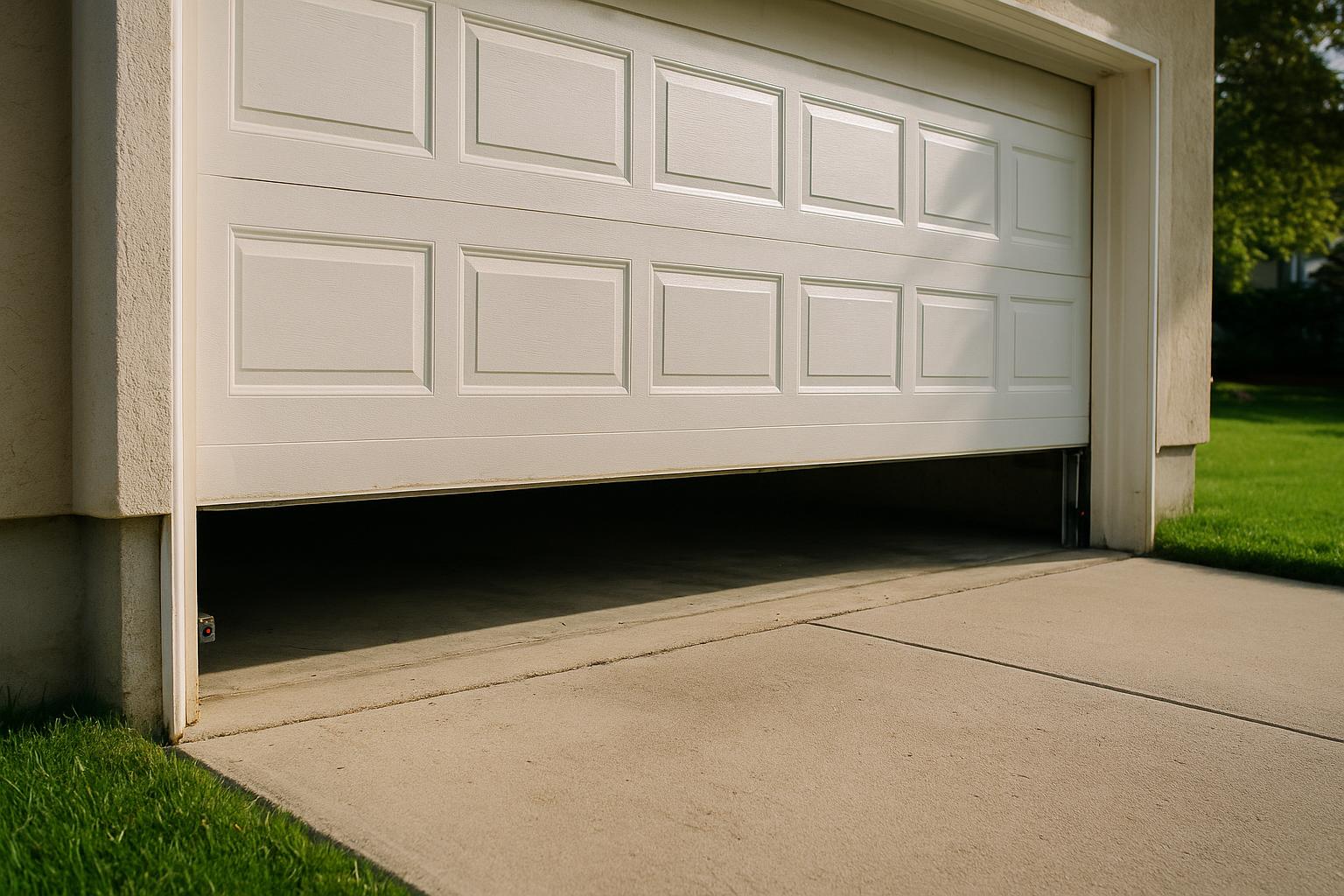
That Frustrating Reverse: What's Going On?
You press the button on your garage door remote, the door starts its descent, and then — just before it reaches the floor — it reverses direction and goes right back up. If you live in Auburn and this scenario sounds painfully familiar, you're not alone. This is one of the most common garage door complaints we hear from homeowners across Lee County, and the good news is that it's almost always fixable.
A garage door that reverses before closing completely isn't just annoying. It's a security risk. It leaves your home vulnerable to weather, pests, and intruders. Let's walk through the most common reasons this happens and what you can do about each one.
1. Misaligned Safety Sensors
This is the number one cause of a garage door that reverses unexpectedly. Every garage door manufactured after 1993 is required to have photoelectric safety sensors — small devices mounted near the bottom of the door tracks on either side. They project an invisible beam across the opening, and if anything breaks that beam while the door is closing, the system reverses to prevent injury or damage.
Here's the thing: these sensors don't have to be blocked by a person or object to malfunction. They can be triggered by:
- Misalignment — If one sensor gets bumped or shifts even slightly, the beam won't connect and the door will reverse every time.
- Dirty lenses — Dust, cobwebs, and pollen (which we get plenty of here in Auburn) can accumulate on the sensor lenses and interrupt the beam.
- Sun glare — Direct afternoon sunlight hitting one of the sensors can overwhelm the receiver and trick the system into thinking the beam is broken.
- Damaged wiring — Frayed or chewed wires running from the sensors to the opener can cause intermittent signal loss.
Start by wiping the sensor lenses with a soft cloth. Then check that both sensors have a steady green light (or whatever color your model uses to indicate proper alignment). If one is blinking, gently adjust it until the light holds steady.
2. The Close-Limit Switch Needs Adjustment
Your garage door opener has a setting called the close-limit switch, which tells the motor how far the door needs to travel before it's fully closed. If this setting is off — even by a small margin — the opener may interpret the door hitting the ground as an obstruction and reverse it.
This commonly happens after a new opener installation, a spring replacement, or even seasonal temperature changes that cause slight expansion or contraction of the door and tracks. On most openers, you'll find a small adjustment screw labeled "down limit" or "close limit." Turning it in small increments can solve the problem. However, if you're not comfortable making this adjustment yourself, it's a quick fix for a technician.
3. Worn or Broken Springs
Garage door springs do the heavy lifting — literally. They counterbalance the weight of the door so the opener motor doesn't have to work as hard. When springs wear out or lose tension, the door becomes heavier than the opener expects. The motor strains, the safety system detects excessive resistance, and the door reverses.
If your door feels noticeably heavy when you try to lift it manually, or if you've heard a loud bang from the garage recently, you likely have a spring issue. Spring replacement is not a DIY job. These components are under extreme tension and can cause serious injury if handled improperly. This is one repair where calling a professional is always the right move.
4. Track Problems
The metal tracks that guide your garage door need to be clean, properly aligned, and free of obstructions. Over time, tracks can develop bends, accumulate debris, or shift out of alignment. When the rollers encounter resistance in a damaged or dirty track, the opener's safety mechanism may interpret it as an obstruction and reverse the door.
Visually inspect your tracks for any obvious dents, gaps where the track meets the wall brackets, or buildup of grime. You can clean tracks with a damp cloth, but bent or misaligned tracks usually require professional attention to avoid making the problem worse.
5. Opener Force Settings Are Too Low
In addition to the limit switch, most garage door openers have a force adjustment that controls how much resistance the motor will push through before reversing. If this is set too low, the opener gives up too easily — reversing at the slightest resistance, even from normal friction.
You can usually adjust the downward force with a small screw or dial on the opener unit. Increase it in small increments and test after each adjustment. Be careful not to set it too high, though, as this could override the safety reverse feature, which exists to protect people and pets.
6. Worn Rollers or Hinges
Garage door rollers and hinges wear out over time, especially the standard steel rollers that come with most doors. As they deteriorate, they create more friction in the tracks, which can trigger the opener's auto-reverse. Nylon rollers are a popular upgrade here in Auburn because they're quieter and last longer, especially in our humid Alabama climate where metal components can corrode faster.
Listen for grinding, squeaking, or popping sounds when the door moves. These are telltale signs that your rollers or hinges need attention.
When to Call a Professional
Some of these fixes — cleaning sensors, adjusting limit switches — are reasonable for a handy homeowner to tackle. But others, like spring replacement, track realignment, and opener diagnostics, are best left to experienced technicians who have the right tools and training.
At Auburn Garage Door Repair, we see reversing doors on a weekly basis, and we can usually diagnose the issue within minutes. Whether you're in Auburn proper, over in Opelika, or out in Smiths Station, our team can get to you quickly and get your door working the way it should.
Don't Ignore the Problem
A garage door that won't close all the way is more than an inconvenience. It compromises your home's security, lets in moisture and pests, and puts extra strain on your opener motor — which can lead to a more expensive repair down the road. If you've tried the basic troubleshooting steps above and the problem persists, it's time to call in a pro.
We're here to help Auburn homeowners keep their garage doors running safely and reliably. Reach out to us anytime — we offer emergency service for those situations that just can't wait.